

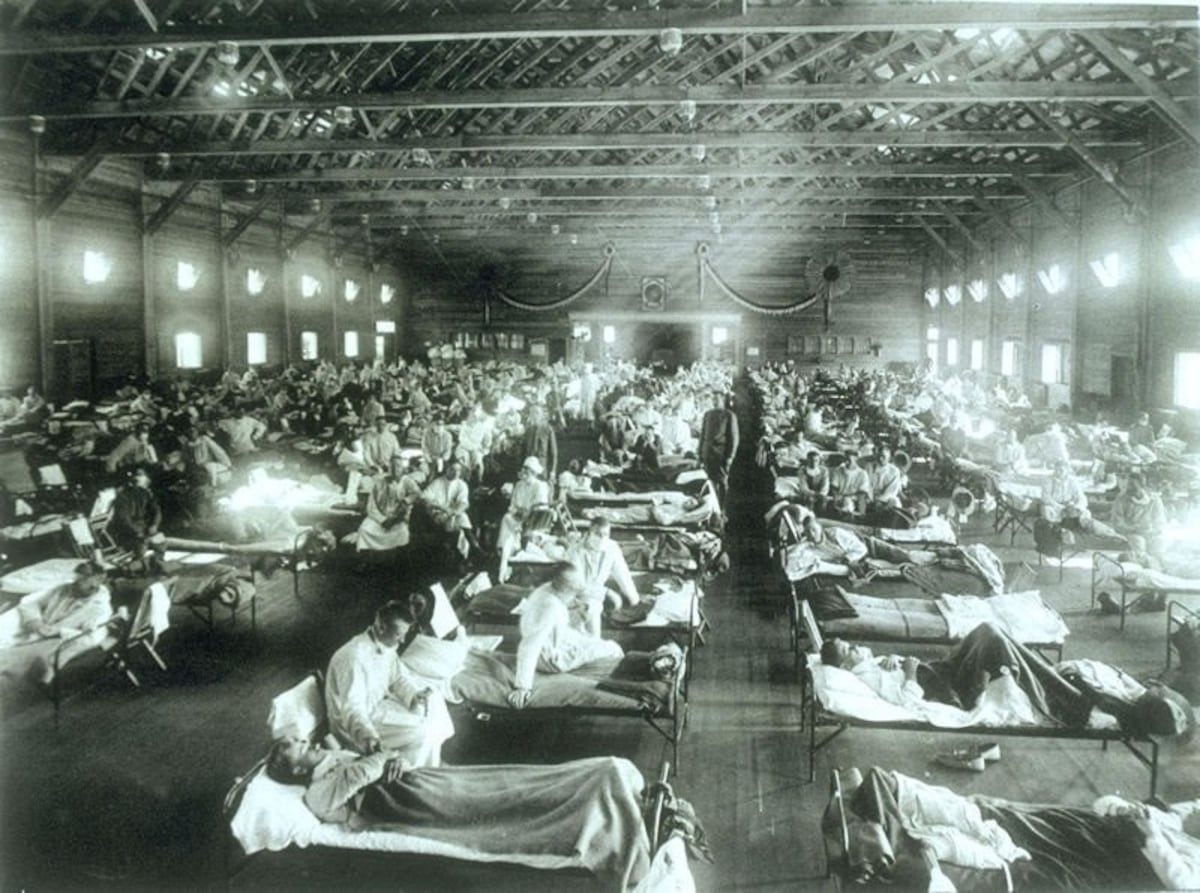
In the spring of 1918, as American soldiers prepared to go “over the top” for the first time during World War I, a handful of army physicians began noticing a strange sickness that began to grip service members.
The virus, resulting in deadly pneumonia, struck down previously healthy young men within days, some within hours. Postmortem exams revealed soggy lungs with evidence of hemorrhaging, according to the National WWI Museum. Unbeknownst to them, influenza was about to ravage the U.S. military — and the world — in a way unseen since the likes of the bubonic plague in the 1350s.
The origin of the virus is believed to have begun from Haskell County, Kansas. Young men from Haskell County were training at nearby Camp Funston, in what is now Fort Riley, Kansas, according to the Army.
On March 4, 1918, the first influenza cases were identified at the Army base. Within three weeks, 1,100 of the 56,222 troops at the camp were sick.
Then, as men boarded crowded transport ships and lived in close quarters —both behind the lines and at the front — influenza struck, killing more lives in just 18 months than the First World War claimed by bullets in four.
The resulting numbers are staggering. The influenza epidemic claimed the lives of an estimated 50 million people worldwide, afflicting 25% of the U.S. population, and in just one year dropping the average overall life expectancy for the nation by 12 years.
“In retrospect a more efficient incubator and disseminator of an infectious disease to pandemic proportions could not be imagined,” according to the Kansas University Medical Center. “Young non-immune persons concentrated in close quarters for weeks and then dispersed throughout the world. … Military transport ships were the likely vector of influenza which was well-established around the world by August of 1918.”
Within the U.S. military, an estimated 116,516 to 117,000 were killed during the war, including 53,402 battle deaths. Of that, approximately 43,000 service members were killed by the influenza virus.
During the postwar period, the devastation wrought by the flu inspired the U.S. Army Surgeon General to commission research to develop a vaccine to ward off influenza. By the 1940s, the first clinical trial among troops demonstrated excellent efficacy, leading to the first influenza vaccine mandate for military personnel in 1945. Seven million men and women were rapidly vaccinated, according to the National Library of Medicine.
However, the effectiveness of the vaccine began to shift, leading to the withdrawal of the military’s influenza vaccine mandate in 1949.
According to the NLM, increasing understanding of antigenic shifting of the influenza virus became clearer and combatable, and the influenza vaccine once again became mandated again in the early 1950s to preserve the health of the force.
That mandate remained active for over 70 years until Tuesday, with Defense Secretary Pete Hegseth’s announcement that the flu vaccine requirement was no longer mandatory “effective immediately.”
RELATED
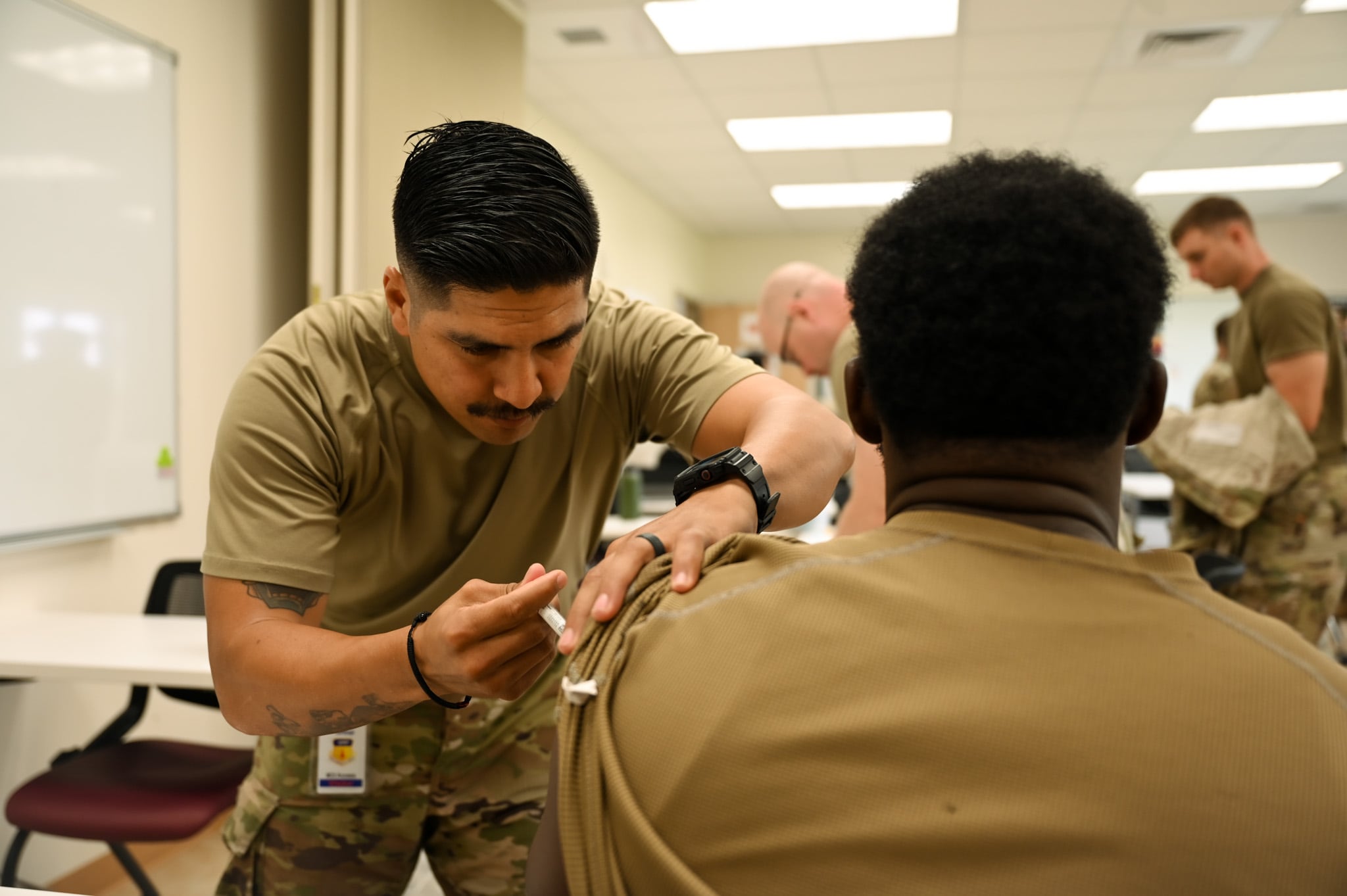
Typically, the Defense Department aims to inoculate more than 90% of active-duty personnel, and, according to an October 2025 Armed Forces Health Surveillance Division report, the program has been a major factor in lower rates of hospitalizations among service members than national U.S. rates.
According to previous Military Times reporting, the incidence rate of hospitalizations for flu among recruits from 2010 to 2014 was 70 per 100,000, compared with the overall military rate of 7.4 per 100,000.
Claire Barrett is an editor and military history correspondent for Military Times. She is also a World War II researcher with an unparalleled affinity for Sir Winston Churchill and Michigan football.
Read the full article here