

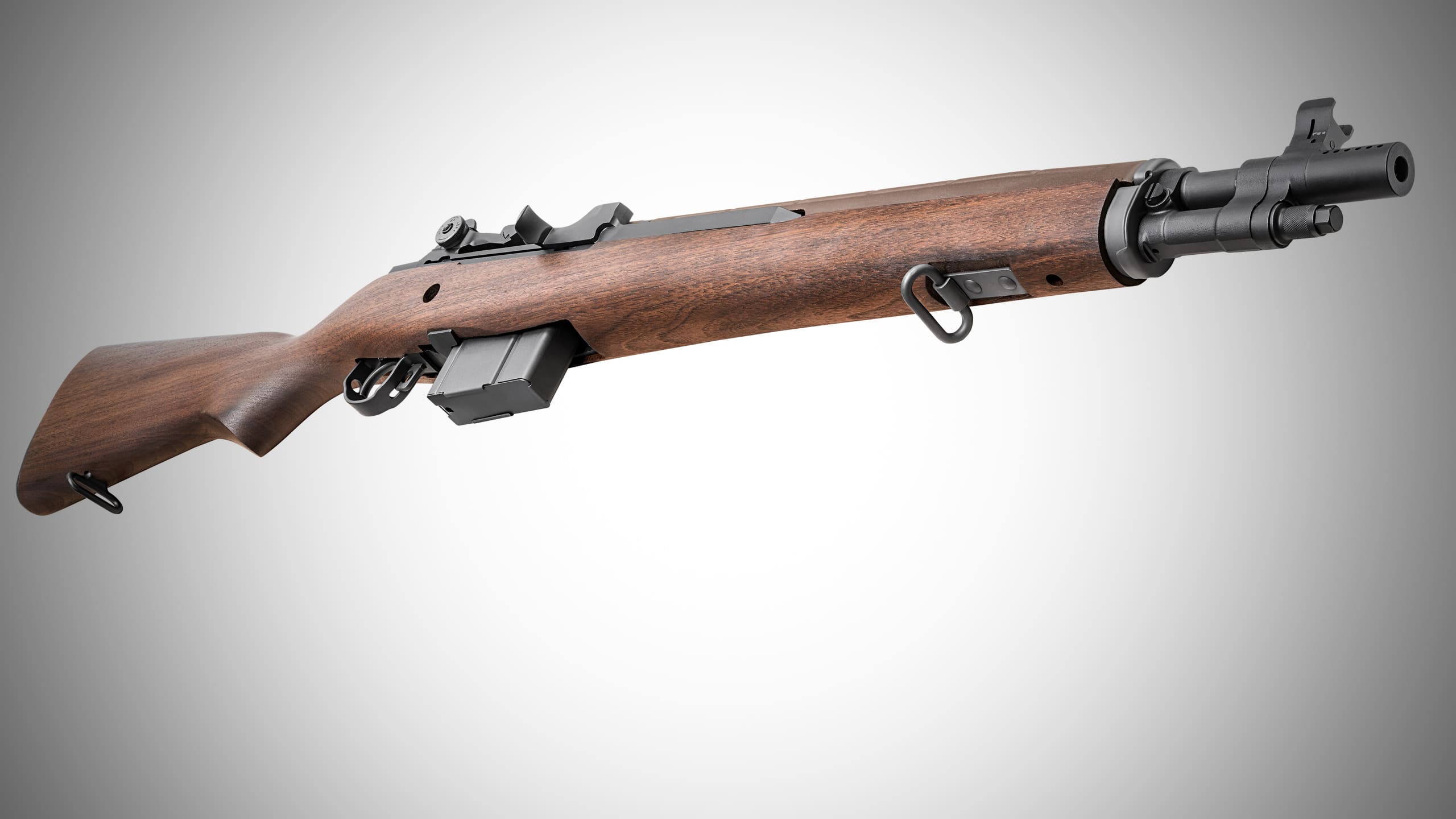
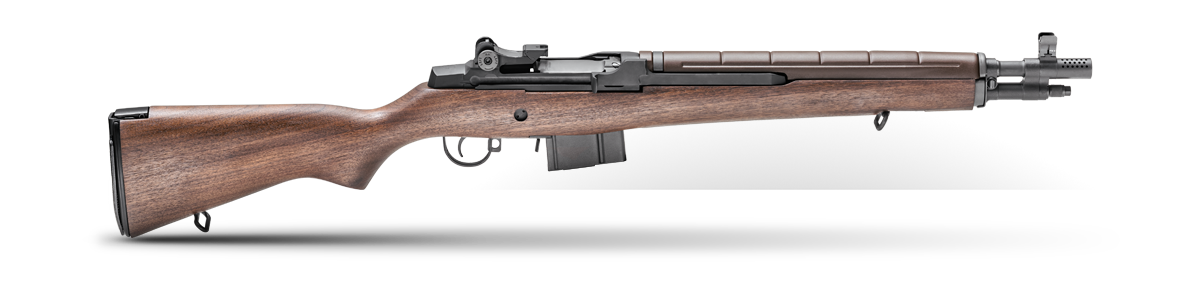
It’s rare that guns based upon classic military firearms don’t trigger (pun intended) some sort of reaction among gun enthusiasts. One of these is the U.S. Military’s M14, brought to the eager hands of civilian shooters by Springfield Armory 50 years ago as the legendary M1A, with many variants offered since. In my opinion, the most striking is the M1A Tanker, inspired by the prototype T26 Tanker Garand.
This shorter version of the original rifle, with its iron sights and wooden furniture, and chambered in the potent .308 Winchester, screams “brush gun” to me. Let’s see how this rifle fits into that category.
What Is a Brush Gun?
While there are many “gun categories”, with each filling a more-or-less specific set of requirements, brush guns arguably fall into a rather flexible category. Brush guns don’t have a precise definition or a clear set of specifications that make them what they are — as opposed to, for example, the well-defined “scout rifle” from Col. Jeff Cooper. However, there is a broad understanding of what a good brush gun should be. It comes from its purpose, which is hunting big game in densely forested areas, where quick shots at short range (usually within 100 yards) are expected.

Hence, brush guns commonly have a following set of distinctive specifications. These rifles need to be handy, and easy to lug around in the woods and shoulder in the nick of time. This means they generally have a barrel on the shorter end of the spectrum. This contributes to a lower overall weight and when using iron sights, and the reduced sight radius is not that significant within the typical short distances used.

Hunting in the woods often requires quick shots and possible fast follow-ups, and it’s not rare for the hunter creeping through the brush to stumble upon and surprise an animal. For those reasons, brush guns need to hold enough ammunition for these circumstances and to be capable of quickly delivering one or several follow-up shots.
Optics have gained popularity among woods hunter, as long as they help with quick target acquisition. Red dots, holographic sights and low-power scopes are all great options — especially for people with aging eyes — but do add some weight to the rifle. Many prefer the traditional iron sights, which are hard to beat for quick target acquisition — providing enough accuracy within the expected shooting distance in bush country.

Finally, these rifles have to be reliable and capable of operating in harsh conditions, as they are more likely to be exposed to elements and collect debris while being carried through the woods rather than being protected in a blind or waiting at a stationary hunting location.
Enter the M1A Tanker
First of all, and by all metrics, the 16”-barreled M1A Tanker is a short rifle. This means that not only is it easy to maneuver through the brush and navigate dense woods, it also mounts quickly to the shoulder with little risk of snagging vines or other tangles.

The sights offer a perfect combination of rapid acquisition and accuracy. The rear sight sports a ghost ring configuration. At the front, between its protective “ears”, the black front post has a 1 millimeter white stripe with a tritium insert, making it easy to find and precisely align with the target.
The stock profile is more akin to the style of classic hunting rifle. The absence of a vertical pistol grip works here at an advantage, with the Tanker mounting to the shoulder like a shotgun. The slight forward slope of the comb works wonderfully at preventing the stock from slapping up into the shooter’s cheek when firing, and also helps minimize felt recoil. Furthermore, the business-end of the M1A Tanker sports a short compensator to help decrease the recoil and muzzle jump of the rifle without adding any significant length to the rifle.

Live The Armory Life. The latest content straight to your inbox plus an automatic entry to each of our monthly gun giveaways!
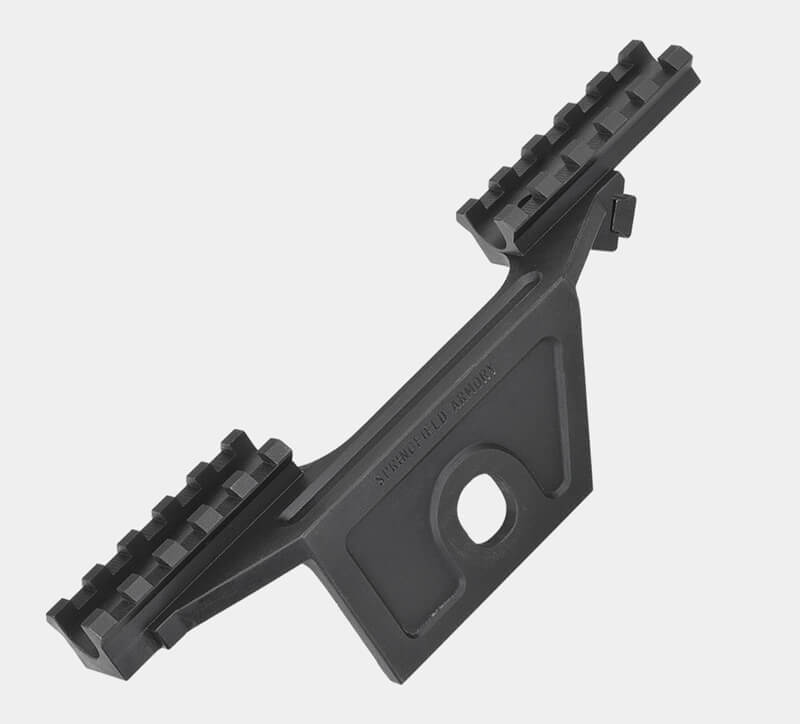
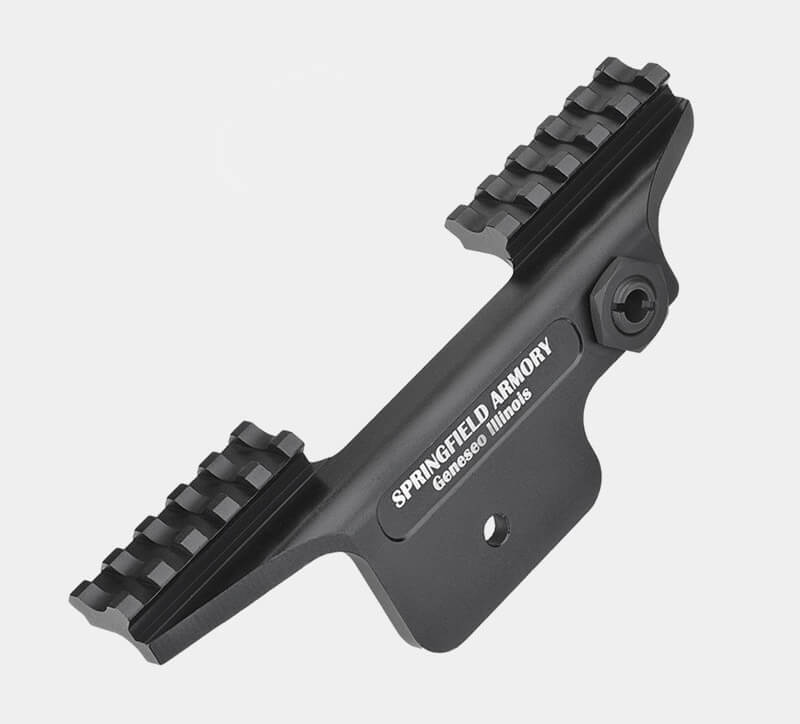
The trigger is crisp, and at 5.5 lbs. of pull, I find it the right amount for woods situations that require fast, off-hand shots. The M1A Tanker feeds from detachable box magazines, which can be had in 5-, 10- and 20-round capacities (the rifle comes standard with a 10-rounder). Should the shooter want to, the magazines can be reloaded by stripper clips, as the receiver has the clip guide at the top of the receiver. Shooters wanting to equip the Tanker with optics will need to purchase the Picatinny rail attachment from Springfield.
The Tanker keeps the fool-proof, no-nonsense manual of operations derived from its heritage. The rifle is quickly loaded by rocking a magazine into the well and pulling the reciprocating charging handle. No fumbling around inserting cartridges one after another into a receiver gate. The charging handle offers the right amount of surface for operation, even with thick gloves without being obtrusive.
Shooting the Tanker
Federal very kindly sent me generous amounts of the two loads used in this article: their target Federal Premium Gold Metal CenterStrike 168-gr. Open Tip Match, and hunting Federal Fusion Tipped 180-gr. loads.

The combination of the ghost ring, the protective ears and the front post allow surprisingly easily precise alignment of the sights with a clear open picture. After some shooting at the bench to ensure I had the sights dialed in, I picked up the rifle from the bags and shot offhand at a quick pace at 100 yards, where all shots from both loads went well into 5”. This rifle will clearly do wonders in the brush.
Regarding velocity, the Gold Medal load shed 220 fps compared to the 2,650 fps factory number, with 2,430fps out of the 16” barrel. The Fusion Tipped load lost 208 fps out of the advertised 2,600 fps with 2,392 fps. Sighted in for 50 yards, both these loads cross back the zero line at 100 yard and do not need elevation adjustment up to 150 yards. Despite the small loss of velocity, the hunting load will perform well as it has the muzzle velocity equivalent to the factory load at 120 yards, which is well within the velocity parameters for this bullet to expand reliably at brush distance.

Ergonomically, this rifle handles like a dream. It is an incredibly well-balanced gun which mounts to the shoulder fast and naturally, with perfect sight alignment. The combined weight of the long wooden forend, gas rod and muzzle brake instinctively place the supporting hand in the optimal position for stable offhand shooting. With the center of gravity being right in the middle of the magazine well, toting the slingless rifle over miles of woods was pleasant.

The M1A Tanker ran like the proverbial clock, feeding, cycling and ejecting without an inkling of issue. As an added and welcomed bonus, the Tanker’s compensator was incredibly efficient at mitigating recoil and muzzle rise, helping with follow-up shots. It is also surprisingly “quiet”. The sharp, teeth rattling concussive back blast typical of such muzzle devices was absent, effectively dulled into a deep boom by the configuration of the many small gas ports. I was left with no shooting fatigue, even after many shots.
My Takeaways
In my opinion, the M1A Tanker ticks all the boxes for a modern and powerful brush gun. The Tanker is a fast, reliable and nimble rifle that will negotiate progressing through dense wood and the quick shots needed there with equal ease. Also, its iron sights will never fail. It is chambered in a powerful, widely available chambering, with many suitable options for any kind of game that can be reasonably pursued in North America, as well as unexpected dangerous encounters of the brush.
This one is a winner in the “brush gun” category, if you ask me.
Editor’s Note: Please be sure to check out The Armory Life Forum, where you can comment about our daily articles, as well as just talk guns and gear. Click the “Go To Forum Thread” link below to jump in and discuss this article and much more!
Join the Discussion
Featured in this article

Read the full article here