

The Pentagon wants to build its stockpile of autonomous weapons from thousands of units to the millions.
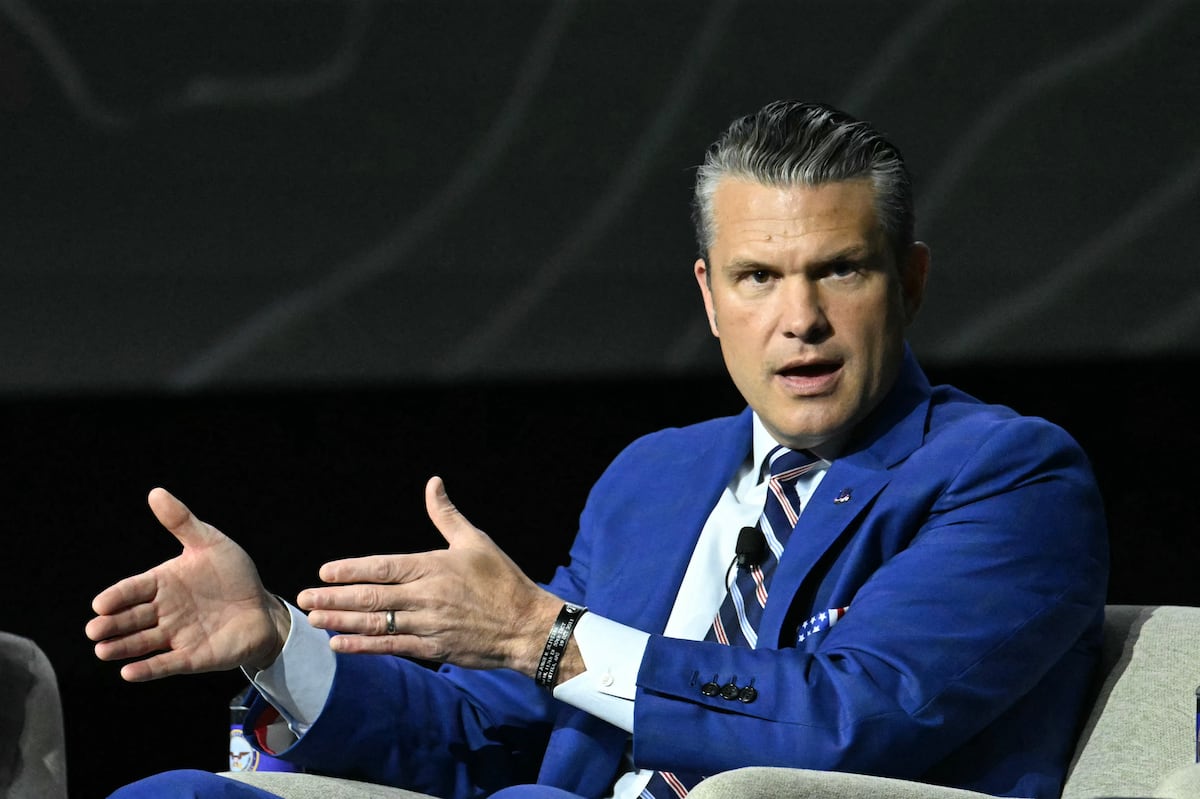
Defense Secretary Pete Hegseth addressed AUSA attendees at the Project Agincourt panel on Wednesday, sharing that the Pentagon is requesting roughly $50 billion in reconciliation funding to support the push to scale autonomous and robotic systems.
This request is part of an effort to make the technology available in far greater numbers.
The figure is separate from the Pentagon’s fiscal 2027 budget request, which includes $53.6 billion for the Drone Dominance initiative. That request covers $16.9 billion for unmanned-system procurement, $14.4 billion for counter-unmanned systems, $13.5 billion for contested logistics, $4.5 billion for collaborative autonomy and $4.3 billion for institutional systems and personnel. The budget request does not establish that the reconciliation funding Hegseth cited is the same money or that it is dedicated entirely to drone purchases
Hegseth characterized the funding as a one-time investment rather than a recurring annual allocation, intended to accelerate the development and production of autonomous and robotic systems.
“Ultimately we will be dealing with hundreds of thousands of one-way attack systems this year and into the millions in years to come at a pace that this department’s never ever seen before.”
The Defense Secretary said the Pentagon must make it easier for new companies to compete in a defense market long dominated by established contractors and costly platforms. Traditional defense firms remain important, he said, but the department also needs lower-cost systems that can be manufactured at scale.
The Army’s Drone Dominance program offers a concrete measure of that ambition. In a December 2025 announcement, the Army said a $1 billion initiative would fund approximately 340,000 small unmanned aircraft systems for combat units over two years. The service said it expected to deliver tens of thousands of drones in 2026 and hundreds of thousands by 2027.
Acting Army Secretary Adam Telle said the service is broadening access to its programs for companies outside the traditional defense industrial base. The Army, he said, must make room for new entrants while continuing to work with established suppliers.
Telle also described plans to coordinate the Army’s autonomous-systems efforts while distributing capabilities to operational units. The service is developing an approach that incorporates drones, autonomous ground systems, autonomous fires and autonomous lift into future combat operations.
“We have an MOS in the Army, 390A, where warrant officers could keep the speciality and the skills over the duration to teach our soldiers how to do robotics,” Telle added.
Expanding access to Army test ranges is another part of that effort, Telle said. Greater access gives developers more opportunities to test systems and receive feedback from military users. He also described efforts to share lessons across the force rather than have individual units and organizations solve the same problems independently.
Hegseth said the department must remove bureaucratic barriers that slow the adoption of new technology, telling the panel, “I want you to tell me which rules can be signed away.” He urged officials to identify rules and directives that could be changed without involving new legislation to accelerate progress.
Natalie Oliverio is an independent journalist and Navy veteran who covers military and veterans’ issues. Drawing on her experience as a talent executive and mentor, she writes about the policies, people and programs shaping the military community.
Read the full article here