

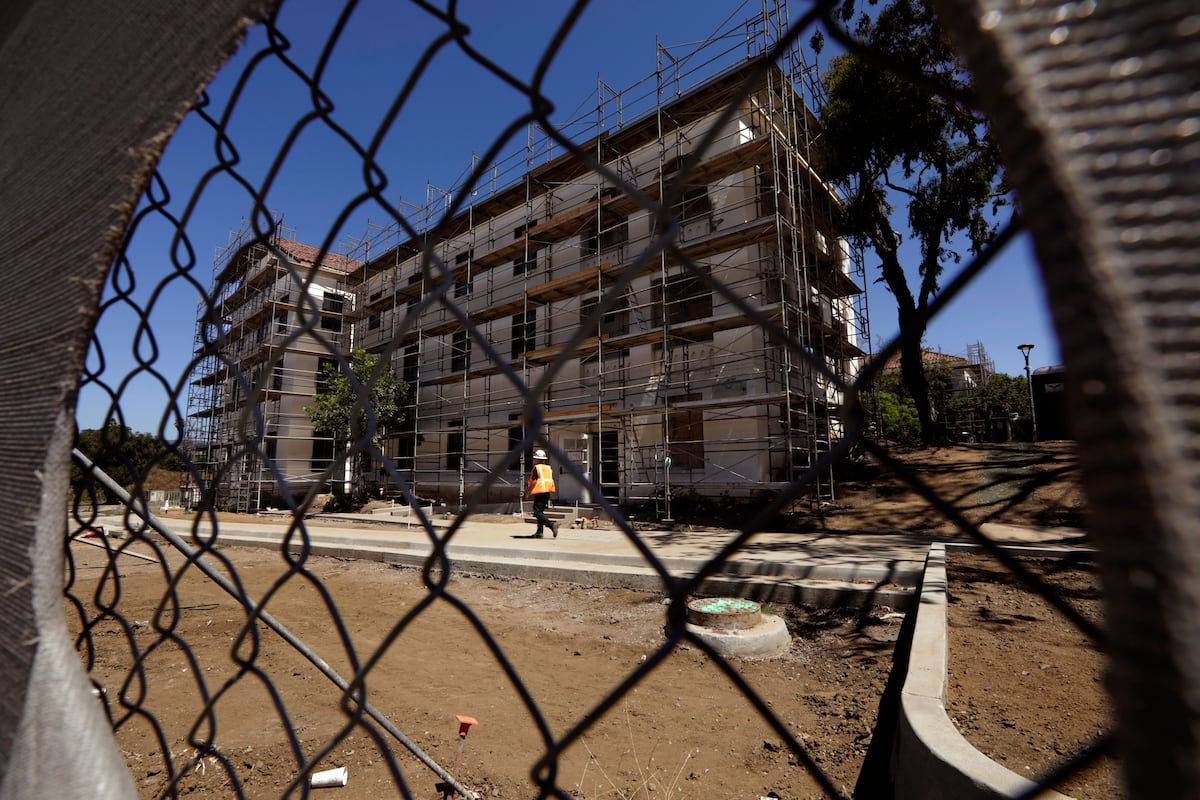
Efforts are underway to expand housing for homeless veterans at the Department of Veterans Affairs’ 388-acre west Los Angeles campus, but a lack of security and services threaten the plan to build a model housing community, lawmakers and advocates said Wednesday.
The grounds currently contain housing for 955 veterans in apartments, tiny homes and rooms, as well as a peer support facility that serves 36 veterans daily.
But it also is plagued by pests and crime, including illicit drug use and sales and prostitution, according to Rep. Mark Takano of California, the ranking Democrat on the House Committee on Veterans’ Affairs.
During a committee hearing, Takano shared stories of veterans whose belongings were stolen after they died and veterans’ dogs needing to be revived with Narcan after they were exposed to drugs.
“I fear that we will doom this property to becoming a vast west-side Skid Row,” Takano said. “This concentration of veterans without adequate supportive services has jeopardized tenant safety, sobriety and mental health. We have created a pressure-cooker.”
Efforts have been underway to build a development for homeless veterans that will provide housing and support, including counseling, medical treatment, recreation and employment services for veterans in California, the state with the largest percentage of homeless veterans.
Last May, President Donald Trump signed an executive order to create a Center for Warrior Independence that promises housing and services for up to 6,000 homeless veterans by 2028.
In December, a federal appeals court ordered the VA to use the property for veterans housing and services, saying the VA broke the law because it failed to provide housing for veterans with mental illnesses or traumatic brain injuries.
The VA unveiled a master plan for the community in 2022 calling for expanded housing, a wellness center, parking facilities and walking trails. The campus has grown from having 55 housing units in 2017 to being able to accommodate nearly 1,000, officials said Wednesday.
In creating the community, the VA is now contending with leases it signed under previous administrations that rented portions of the land to private and public entities, including the University of California-Los Angeles, which built its baseball stadium there. A private school’s sports facilities are also located on the site, as well as an oil company and a preservation organization that intended to restore a historic chapel on the property but has not started.
This year, the VA canceled leases with the private Brentwood School, a parking company and Wadsworth Chapel Heritage Partners. Litigation over UCLA’s baseball stadium is ongoing.
In a report delivered to Congress Tuesday, the VA said it received $324,052.83 in lease payments from UCLA from October 2024 to September 2025, and UCLA said it has provided additional services and support to veterans worth $2.7 million, although the VA could not “confirm or substantiate if the benefits claimed by UCLA were in fact provided to veterans.”
Committee Chairman Rep. Mike Bost, R-Ill., said it is critical to “correct course” at the West LA VA campus, to include the leases.
“The VA is being significantly underpaid for renting land intended to be used to the benefit of veterans,” Bost said. “Veterans are always at the top of my mind and all of my colleagues’ minds, and I want to ensure you that those using this land have the same mindset.”
Jim Zenner, director of the Los Angeles County Department of Military and Veterans Affairs, said during the hearing that campus security is a problem because of jurisdictional issues and understaffing of the VA Police Department.
The location, which is in LA County, not the City of Los Angeles, sits in a “jurisdictional dead zone” that contributes to “critical gaps in services and safety,” Zenner said.
Department officials said they are taking steps to improve security at the campus, recently awarding a “multimillion dollar” lighting contract and hiring up to 160 VA police officers, an increase from last year.
Zenner urged the administration to provide diverse housing options, such as homes for veterans who work on the campus, transitional housing for veterans who have recently left military service and their families, and student veterans, as well as the homeless.
And Zenner proposed creating a federal Veterans Treatment Court on campus that provides mentorship, management and treatment to veterans who commit non-violent crimes.
“Nationwide this model works. It produces reduces recidivism, improves housing outcomes and significantly enhances public safety,” Zenner said.
VA officials said the facilities show promise in that 98% of those served have remain housed and have not returned to the streets.
VA Under Secretary for Health John Bartrum said the department i committed to building a “community, not just a housing complex.”
“This campus … has not been living up to the needs, and so we are taking this opportunity to address those needs and to make sure that it lives up to the fulfillment of the promise,” Bartrum said.
Patricia Kime is a senior writer covering military and veterans health care, medicine and personnel issues.
Read the full article here