

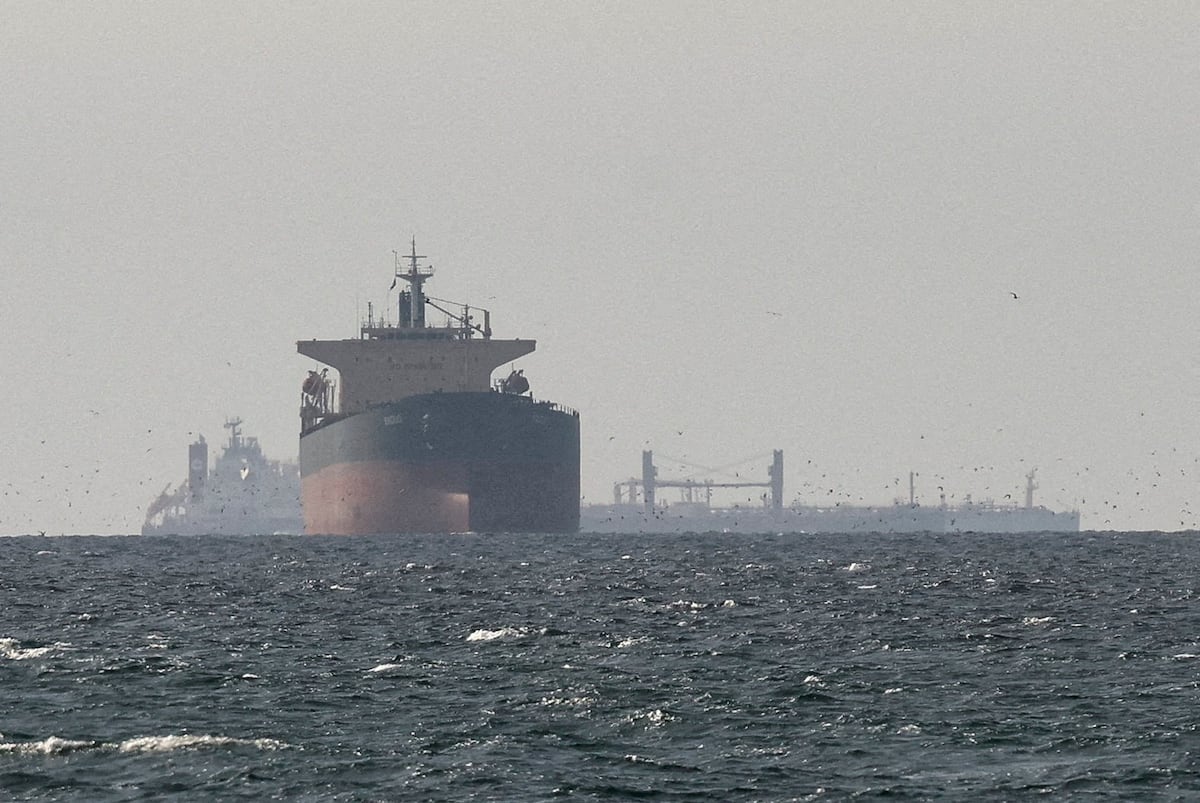
No ship entered or exited Iranian ports during the first 24 hours of a sweeping U.S. maritime blockade, in an operation involving more than 10,000 troops and over a dozen warships, U.S. Central Command said Tuesday.
The move places U.S. forces at the center of a key global shipping route after President Donald Trump on Sunday said the U.S. Navy would blockade the Strait of Hormuz, a maritime corridor through which much of the world’s oil shipments flow.
The blockade began Monday morning and applies to all vessels coming and going from Iranian ports, the command said on social media, adding on Tuesday that six merchant ships had followed orders to turn around. Vessels not engaging with Iranian ports remain free to navigate the Strait of Hormuz.
CENTCOM, the military command responsible for overseeing operations in the Middle East, said the endeavor has also included upwards of 100 fighter and surveillance aircraft. Some other assets involved include guided missile destroyers, unmanned aircraft and a littoral combat ship.
Defense analysts have warned that enforcing a military blockade could stress the two countries’ brittle ceasefire and push Tehran — or Iran-aligned groups — toward retaliation. A blockade of this scale, experts also said, would be difficult to sustain over a long period of time and could impact energy prices, which in turn may influence the U.S. midterm elections.
Trump on Sunday also said U.S. forces would stop any vessel that paid an Iranian toll, but it is unclear if that pronouncement has been implemented.
Eve Sampson is a reporter and former Army officer. She has covered conflict across the world, writing for The New York Times, The Washington Post and The Associated Press.
Read the full article here