

The Pentagon announced three framework agreements today with prime defense manufacturers to surge production and delivery of missile systems and components.
Agreements made with Lockheed Martin, BAE Systems and Honeywell Aerospace will rapidly accelerate production of a wide array of missile components, including ballistic interceptors.
“Through this agreement, we are actively building the Arsenal of Freedom with speed and urgency,” Michael Duffey, Under Secretary of War for Acquisition and Sustainment, said in a release. “By empowering industry to invest in the factory floor, we are building a decisive and enduring advantage for our warfighters to outpace any potential adversary.”
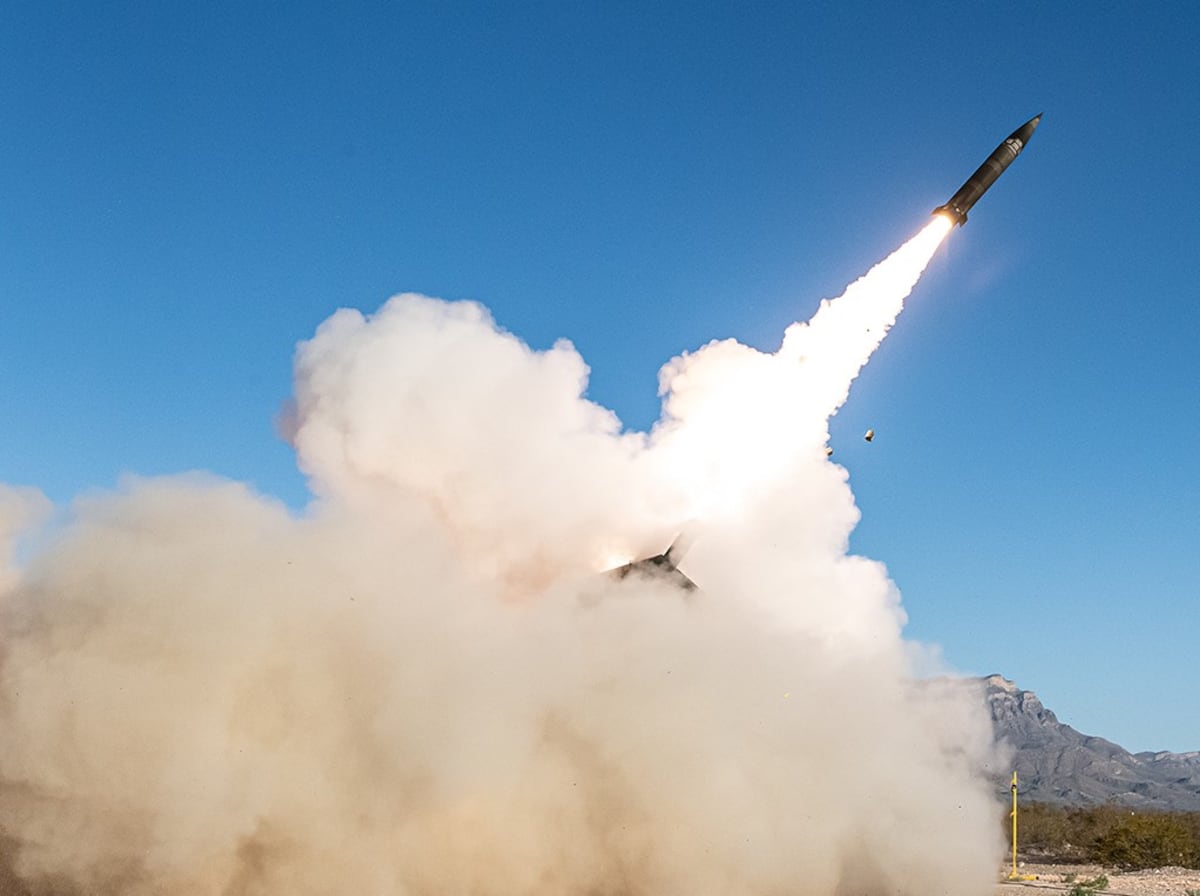
Lockheed will quadruple production levels of the Precision Strike Missile, which was used for the first time in combat against Iranian targets in Operation Epic Fury.
“Lockheed Martin delivers the advanced precision fires capabilities the warfighter needs, including the Precision Strike Missile (PrSM), which expands deep-strike capability,” said Jim Taiclet, Chairman, President and CEO of Lockheed Martin, in a statement.
The company will also work with BAE Systems to ramp up output of the Terminal High Altitude Area Defense interceptor, or THAAD. BAE Systems announced that annual THAAD production rates will also quadruple.
Honeywell will rapidly increase production of critical missile components. These include navigation systems, electronic warfare mediums used on fighter jets and Advanced Medium-Range Air-to-Air, or AMRAAM, missiles, and the Assure actuator, which controls and maneuvers missiles in flight.
Jim Currier, president and CEO of Honeywell Aerospace, said in a statement that the company “is proud to embrace the challenge and meet this urgent need.”
All missile systems and components being surged have critical bearing on U.S. ability to defeat aerial threats, including one-way attack drones. The THAAD interceptor is designed to take down aerial threats including intermediate and short-range ballistic missiles flying at up to 17,000 miles an hour.
The PrsM features enhanced GPS capabilities, can hit targets from about 250 miles away and is compatible with both the M142 High Mobility Artillery Rocket Systems, or HIMARS, launcher as well as the M270A2 Multiple Launch Rocket System, or MLRS, commonly used by European allies.
Lockheed recently tested a new version of the PrSM designed to strike moving targets at sea.
Zita Ballinger Fletcher previously served as editor of Military History Quarterly and Vietnam magazines and as the historian of the U.S. Drug Enforcement Administration. She holds an M.A. with distinction in military history.
Read the full article here