

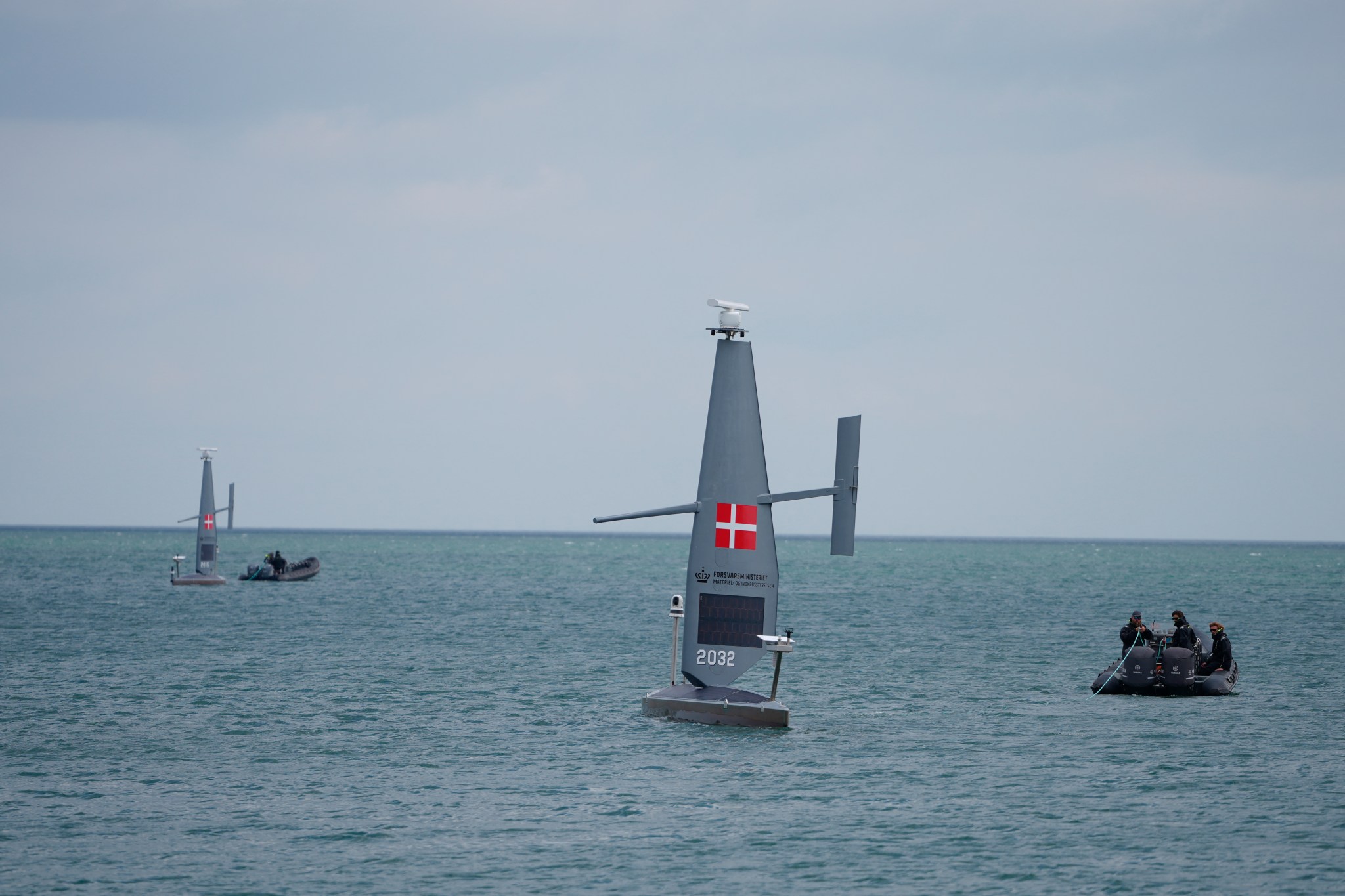
When Sweden and Finland applied to join NATO in May 2022, it was hailed as the Baltic Sea’s transformation into “a NATO lake.” Since then, however, the sea has been less than placid, as confrontations with Russia and interference with undersea infrastructure have raised tensions to new heights.
Sweden, Finland, and their allies now face a challenge in countering Russian behavior without stoking tensions further.
“It’s a very difficult question, because you don’t want to escalate,” Maj. Gen. Peter Boysen, chief of the Danish army, said at the Association of the U.S. Army annual conference in Washington, D.C., in mid-October.
The Baltic has long been a site for hybrid warfare — a broad term for malign activity below the threshold of war that is often hard to attribute, like disinformation, sabotage, cyberattacks and territorial violations — but the scale of that activity has increased since Russia invaded Ukraine in 2022, creating what Dutch military intelligence earlier this year called “a real risk of unintended and therefore difficult-to-control escalation.”
One of the highest-profile cases was the Nord Stream pipeline attack in September 2022. Since then, other pipelines and cables in the Baltic have been damaged in what Western officials often label acts of sabotage. Alongside frequent GPS jamming, NATO allies are also seeing more airspace violations by Russian aircraft and more drone incursions at sensitive sites, like military bases and airports.
Russia consistently denies responsibility for those acts, but NATO leaders link them to Moscow’s efforts to undermine its neighbors, partly in retaliation for their support of Ukraine, and they have been more vocal in calling those efforts out.
In an assessment published in September, Denmark’s Defense Intelligence Service said “Russia has intensified its use of sabotage, destructive cyber attacks and is attacking targets in Europe with drones.” It added: “The hybrid war is escalating.”
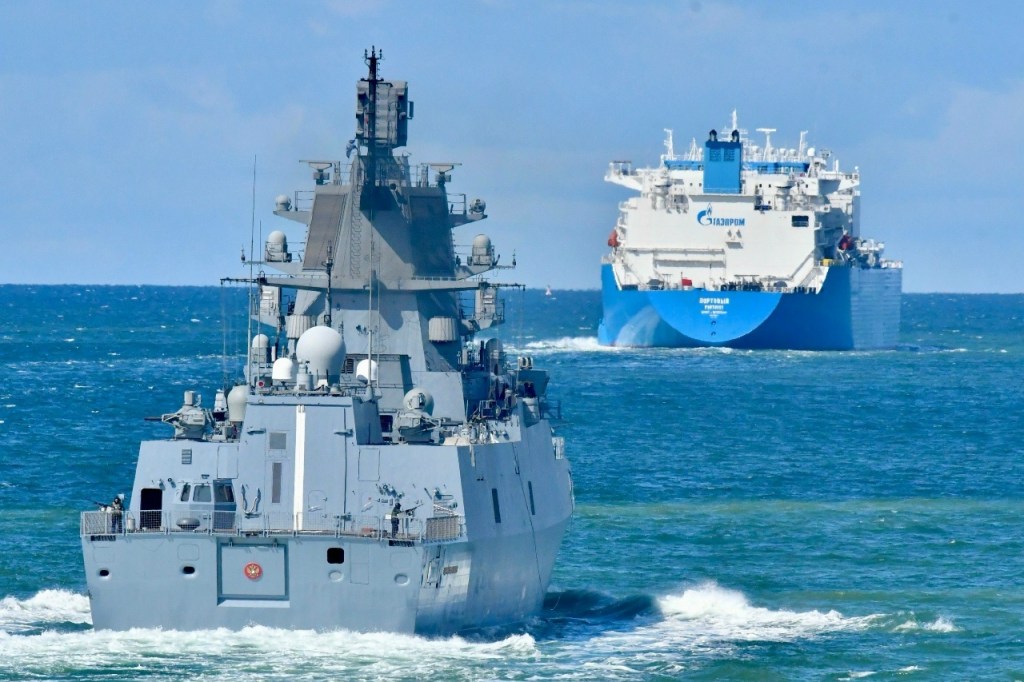
Russia has also been more actively protecting “shadow fleet” vessels it uses to skirt sanctions, including by sending warships to escort them through the Baltic. That has led to confrontations with NATO.
“Russian forces are increasingly acting aggressively towards NATO military units in the Baltic Sea region,” the assessment said.
“The most recent and most serious example,” the assessment cites, was an incident on Sept. 14 in which a Russian frigate near Denmark’s coast fired flares at a Danish military helicopter.
That incident epitomized the challenge of deterring such behavior, Boysen said during a panel event at the conference. “How should your response be to that? It would, for us, be to de-escalate, but we’ve also seen that when the pattern of our adversary’s operations change when they pass through the Baltic Sea, how do you respond to that in a balanced way so you’re not increasing [tensions] but you actually say, ‘We know this is not the right way to do it. We want to decrease it back to normal’?”
“What we don’t want to do is to move ‘normal’ to a new intensity level,” Boysen added. “Normal needs to be decreased, and that’s a very, very difficult question.”
Russia’s wartime footing and wariness of Ukraine’s long-range strikes also make “escalation control” difficult, Lt. Gen. Kari Nisula, the Finnish Defense Forces’ deputy chief of staff for operations, said during the panel.
When Russian forces operate in the Baltic, “they try to defend themselves [with] air-defense measures, force-protection measures, and I think they are kind of afraid that a missile will hit their ships and that kind of thing, which is quite normal,” Nisula said. “It’s a very difficult environment from an escalation-de-escalation perspective.”
While tensions around the Baltic Sea are not new, growing concern about hybrid threats has led NATO to increase its vigilance and cooperation there.
In October 2024, Germany set up Commander Task Force Baltic, a multinational command to coordinate naval activity and provide up-to-date maritime situational awareness to allies. Around that time, NATO’s Allied Command Transformation set up Task Force X-Baltic to accelerate employment of uncrewed systems and AI integration to better protect undersea infrastructure. In January 2025, NATO began Baltic Sentry, an open-ended operation to enhance the alliance’s presence and responsiveness in the region.
Nordic countries, Sweden and Finland in particular, are also collaborating to better monitor and defend their territory. This summer, in response to a spate of drone incursions in Finland and other NATO states, Stockholm authorized its military to help Helsinki maintain “territorial surveillance and territorial integrity,” Maj. Gen. Johan Pekkari, commander of the Swedish army, said during the panel.
“To use the air force as an example, we leave air assets to the air operational command of Finland, and they lead their sorties and [take] care of those drones,” Pekkari said. Sweden could eventually lend counter-drone systems to that effort as well, Pekkari said. “That is one example of how we cooperate when it comes to that kind of challenge.”
Boysen said that alongside “being able to project power,” the ability to detect and identify malign activity is necessary to counter Russian activity without sparking escalation.
“Being able to put light on the adversary, to tell the adversary we know what you are doing — I think that is the way to de-escalate it,” Boysen said. “If you don’t do anything and if you are not able to detect, I think you put yourself in a very bad situation, and that would change ‘normal’ and make it a new normal, which is in effect an increase, I think, in the threat to you.”
Some in NATO argue that highlighting the threat from Russia may only boost the Kremlin’s efforts to sow fear within the alliance and erode support for Ukraine. Others in the alliance say that transparency is necessary to keep their publics engaged and to maintain support for efforts to counter Moscow. Despite that debate, few NATO officials, especially those from frontline countries, expect Russia to change course.
“When it comes to Putin and his plans, there were hybrid attacks between 2014 to 2022. There were an increasing number of hybrid attacks after 2022, and I do think that I’m echoing how my colleagues are talking in Finland when I say that we might have to expect even more hybrid attacks in the near future,” Leena-Kaisa Mikkola, Finland’s ambassador to the U.S., said at an event hosted by the Atlantic Council and the Norwegian Embassy in Washington, D.C., in September. “I quote what our defense minister said a couple of days ago: the situation in the Baltic Sea is ‘quite lively.’”
Read the full article here