

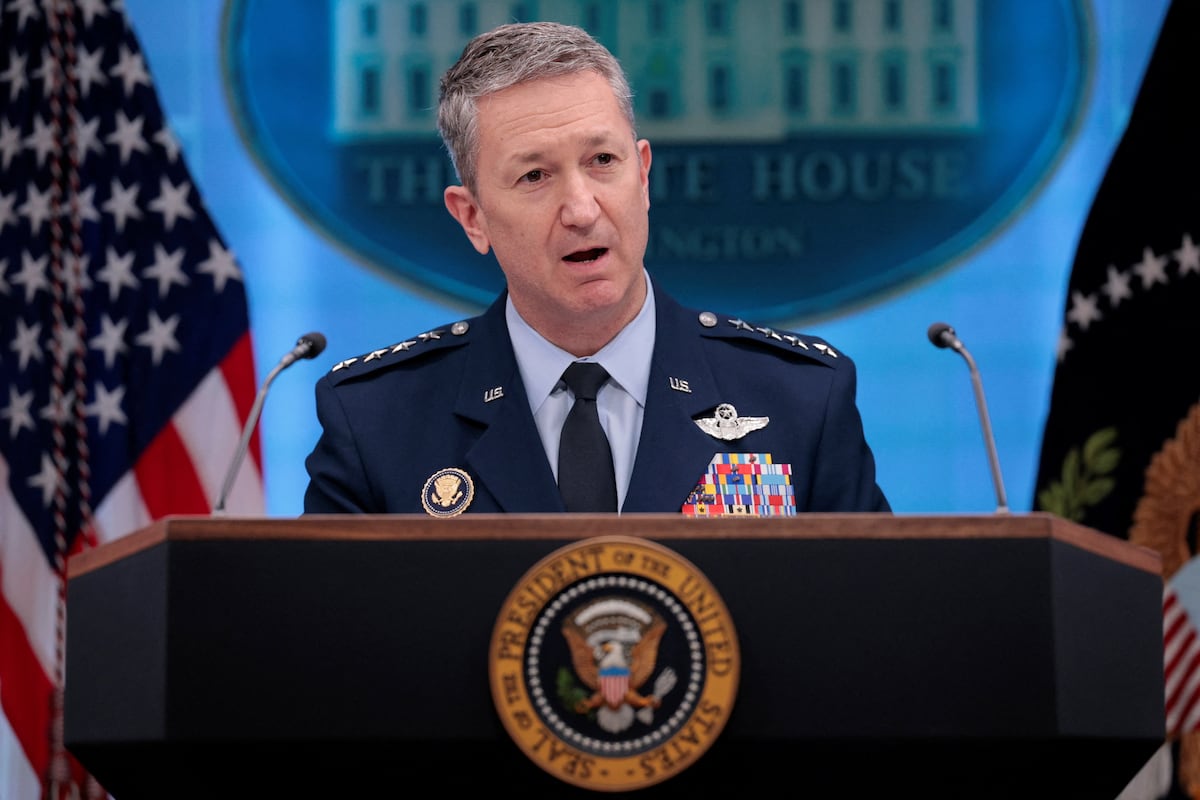
Gen. Dan Caine, the chairman of the Joint Chiefs of Staff, made his first official trip to Venezuela this week, five months after the high-risk U.S. military operation that removed the country’s strongman leader, Nicolás Maduro, from power.
Caine held bilateral discussions with senior leaders of the interim government and with U.S. embassy personnel. During those meetings, he underscored the importance of Venezuelan stability, broader security across the Western Hemisphere and the military’s commitment to implementing Trump’s “three-phase plan,” Joe Holstead, a spokesman for Caine, said in a statement.
The plan focuses on avoiding chaos, bolstering an economic recovery and — eventually — facilitating a transition to democracy.
A key pillar of the effort has been restoring Venezuela’s oil industry, which Trump previously characterized as a “total bust.”
All of that changed with Operation Absolute Resolve. The sprawling military raid — which involved more than 150 aircraft — culminated in Delta Force commandos descending on a heavily fortified compound and capturing Maduro and his wife, Cilia Flores.
The pair were later flown to New York, where they each face criminal charges.
The U.S. military, meanwhile, continues to maintain a robust presence in the region, with the USS Nimitz Carrier Strike Group sailing into the Caribbean in May.
The Pentagon, since September, has carried out at least 62 strikes in the waters off South America, killing nearly 200 people whom the Trump administration says were involved in drug trafficking, according to data compiled by Military Times.
The legality of those operations continues to be hotly contested.
Tanya Noury is a reporter for Military Times and Defense News, with coverage focusing on the White House and Pentagon.
Read the full article here