

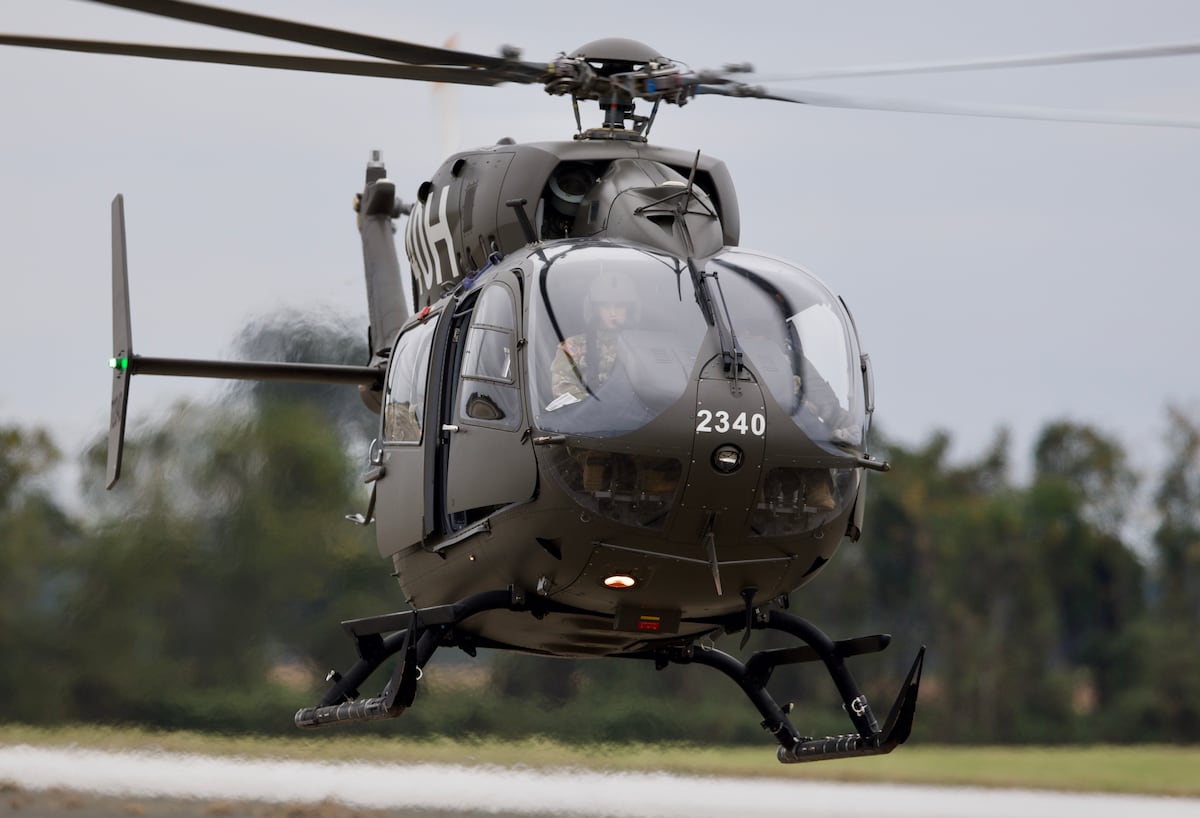
The U.S. Army is turning its helicopter pilot training over to civilian instructors and a private company as the military grapples with a rise in severe aviation accidents.
M1 Support Services won a contract to operate the service’s new Flight School Next Program, the Army announced Thursday, shifting training and equipment to a “contractor-owned, contractor-operated” model at Fort Rucker, Alabama.
The award, worth up to $10 billion for up to 26 years, comes amid growing concern about aviation catastrophes that, according to Pentagon data released in 2025, showed around a 55% jump in serious accidents during the 2024 budget year, compared to four years prior.
“Flight School Next delivers a critical improvement in our Initial Entry Rotary Wing Training model. Simply put, it delivers new military helicopter pilots with far better foundational skills,” said Maj. Gen. Clair A. Gill, head of the U.S. Army Aviation Center of Excellence, in the release. “The fact that it delivers this increased capability at a significant long-term savings to our Army is a great added benefit.”
As recently as last week, the Army directed a service-wide AH64 Apache training flight standdown after a helicopter crash near Fort Hood, Texas, killed two soldiers.
Under the new plan, M1 is set to train 800 to 1,500 Army pilots each year. The company, which beat out Bell for the contract, focused its plan on using Robinson Helicopters’ R66 airframe. The Army currently trains around 1,250 rotary-wing pilots annually on a UH-72 Lakota helicopter, which some have argued allows students to rely too heavily on advanced technology instead of developing basic flight skills.
The transition is expected to take three to four years, and eventually, M1 will provide the helicopters, maintenance, flight simulators and instruction. The Army retains training oversight.
In an Army release, Brent G. Ingraham, the assistant secretary of the Army for acquisition, logistics and technology, called the move “a major step forward in modernizing how we train our aviation force.”
Eve Sampson is a reporter and former Army officer. She has covered conflict across the world, writing for The New York Times, The Washington Post and The Associated Press.
Read the full article here