

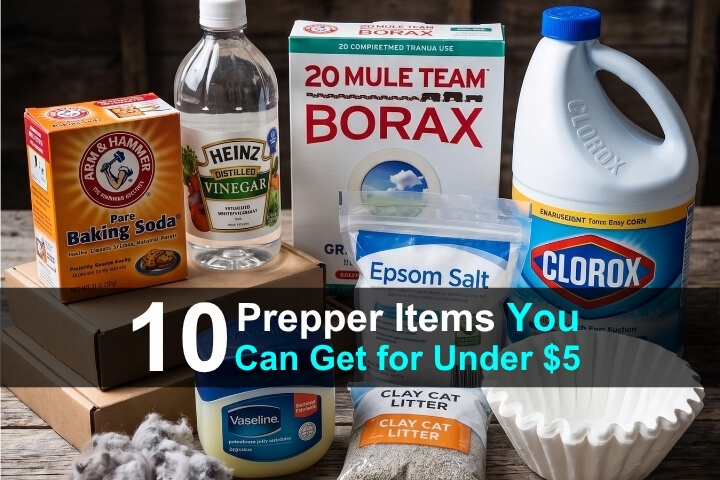

When people think about prepping, their minds usually jump to expensive gear like generators, tactical bags, and water filter systems with price tags in the hundreds. But some of the most useful items for riding out a disaster are already in your house. These everyday household items are cheap, easy to find, and usually overlooked, which is exactly what makes them so valuable.
This list of inexpensive prepper items comes from the YouTube channel The Provident Prepper, and it’s packed with practical uses you may not have considered before. You can watch the video and see the list below.
1. Baking Soda
Baking soda earns its spot on almost every prepper list because it does so much more than leaven bread. It works as a homemade toothpaste, a fire suppressant, and a powerful deodorizer. Sprinkle it on smelly carpet, let it sit, then vacuum it up. It also works as a dry shampoo in a pinch, and adding a bit to a pot of beans while they soak helps soften them before cooking (just be sure to drain and rinse before cooking in fresh water).
Baking soda is also an excellent natural cleaner. A simple combination of Dawn dish soap and vinegar sprayed on a shower, followed by a sprinkle of baking soda and some scrubbing, cuts through grime without harsh chemicals. The good news for long-term storage: baking soda has an indefinite shelf life. It may lose some leavening power over time, but its other uses remain just as effective.
Here are some more uses for baking soda.
2. White Vinegar
Like baking soda, white vinegar is a jack-of-all-trades. It softens hard water in the dishwasher and washing machine, cuts down on the amount of detergent needed, and removes rust and scale from tools when they are soaked in a vinegar-water solution. Wrapping a vinegar-soaked paper towel around a faucet plagued by hard water buildup and leaving it for an hour will dissolve the mineral deposits almost like magic.
In the kitchen, a diluted vinegar rinse can help remove residues from produce. Outdoors, straight vinegar sprayed directly on weeds acts as an effective, chemical-free weed killer, even on stubborn plants like bindweed, without harming the surrounding garden. Because it gets used so often, buying vinegar in bulk (jugs or stackable boxed containers) makes sense for anyone serious about self-sufficiency.
Here are some more uses for white vinegar.
3. Borax
Borax is a century-old preparedness staple with a surprising range of uses. A simple trail of borax will kill ants that carry it back to their nest, and it works similarly on roaches. It boosts laundry detergent, treats mold, and works as a strong deodorizer.
One catch: borax is often sold in cardboard boxes, and if stored in a humid area, moisture can cause the box to swell and create a mess. For long-term storage, transfer borax into a sealed Mylar bag and label it clearly.
Here are some more uses for borax.
4. Unscented Bleach, Pool Shock, and Safer Water Disinfection Alternatives
Calcium hypochlorite (pool shock) can purify thousands of gallons of water and it has a long shelf life, making it great for your long-term water purification plan. However, it’s also a dangerous chemical. It can release gas, corrode metal containers, and even ignite under the wrong conditions. Long-term storage tests have shown that bottles sealed inside Mylar bags can bulge from built-up gas, and calcium hypochlorite should never be stored in large quantities or near metal.
Unscented regular chlorine bleach (with no thickeners or fragrances) is another good option, but it degrades within about six months of manufacture, becoming unreliable for water treatment well before its printed date suggests, and it can be surprisingly expensive to find in its truly unscented form.
Because of these downsides, it is worth knowing the free and low-cost alternatives:
- Boiling is the gold standard. Water at 212°F kills essentially all pathogens, though boiling alone will not remove protozoa cysts, so filtering beforehand still matters.
- Pasteurization using a solar oven can disinfect water without using any fuel.
- Solar water disinfection (SODIS) uses nothing but sunlight. Fill a clear glass or plastic container (no more than about 4 inches in diameter) about two-thirds of the way, shake it to oxygenate the water, then fill it the rest of the way and lay it on its side in direct sunlight. In sunny conditions, 4 to 6 hours of exposure is enough to kill harmful organisms in the water; cloudy weather may require a day or two. Even an old, empty soda or water bottle (with the label removed) works for this method.
The takeaway: transparent, narrow containers and a basic understanding of solar disinfection can provide reliable, free water treatment without the risks that come with storing dangerous chemicals.
5. Cardboard Boxes
Cardboard boxes are everywhere, especially with how much of daily life now arrives via home delivery, and they are essentially a free resource. Beyond organizing and storing supplies, cardboard makes an effective insulator for windows or as a barrier between a sleeping bag and cold ground. It is also a reliable fire starter.
In the garden, flattened cardboard works as a weed barrier when layered under wood chips, preventing weeds from pushing through. Torn into smaller pieces, it also breaks down well in a compost pile, enriching the soil over time.
6. Petroleum Jelly
Petroleum jelly is best known for soothing diaper rash, but it has a long list of other practical uses. It works as a skin protectant, a waterproofing barrier, and a remedy for chapped lips. Rubbed onto metal tools, it helps prevent rust.
It also makes an excellent fire starter. Cotton balls coated in petroleum jelly catch quickly and burn long enough to get a fire going, even in damp or cold conditions.
Here are some more uses for petroleum jelly.
7. Epsom Salt
Epsom salt is loaded with magnesium, which makes it useful well beyond a relaxing soak in the tub. It helps soothe sore, overworked muscles and can be part of a recovery routine after an injury.
A warm water soak with Epsom salt also makes stubborn splinters much easier to remove after about 15 minutes, and it softens cracked, rough feet with regular soaking. In the garden, Epsom salt acts as a fertilizer for certain vegetables, and soaking seeds in an Epsom salt solution before planting can help with germination while giving seedlings an early magnesium boost.
Here are some more uses for epsom salt.
8. Unscented Clay Kitty Litter
You don’t need an indoor cat to benefit from kitty litter. It provides traction on icy surfaces, works as an emergency toilet solution, and controls moisture and odor. Spilled oil in the garage is easily cleaned by sprinkling kitty litter over it, letting it soak in, then sweeping it up. The same trick works for cleaning up other unpleasant messes, since it absorbs liquid and helps neutralize odor at the same time.
9. Coffee Filters
Even households that do not drink coffee can put coffee filters to good use. They are inexpensive, and one of their most important preparedness roles is clarifying water (removing debris and particulates) before it is disinfected, whether by boiling, chemical treatment, or solar disinfection.
In the kitchen, coffee filters work well for straining fats and oils, filtering teas, or straining homemade nut milk for a smoother texture. Secured over the top of a fermentation jar with a rubber band, a coffee filter lets air in and out while keeping dust and flies out. They are also great at absorbing moisture, making them useful for drying a freshly washed cast iron pan and helping prevent rust.
Here are some more uses for coffee filters.
10. Dryer Lint
Dryer lint comes free with every load of laundry, and while it can turn into a stringy mess if not managed, storing it in a labeled can or container solves that problem easily. Kept near a wood pile or fire-starting supplies, lint becomes an excellent fire starter on its own, and its performance improves even further when combined with melted wax, using something like an egg carton mold to create long-burning fire-starter pucks.
Bonus: A Cheap Plastic Shower Liner
A basic, inexpensive shower curtain liner is lightweight, waterproof, and surprisingly versatile. It can cover and insulate a window using painter’s tape, serve as an improvised poncho, act as a barrier to protect a mattress from moisture, or double as a ground tarp. A non-clear version can even provide a privacy screen for an outdoor bathroom setup.

Read the full article here