

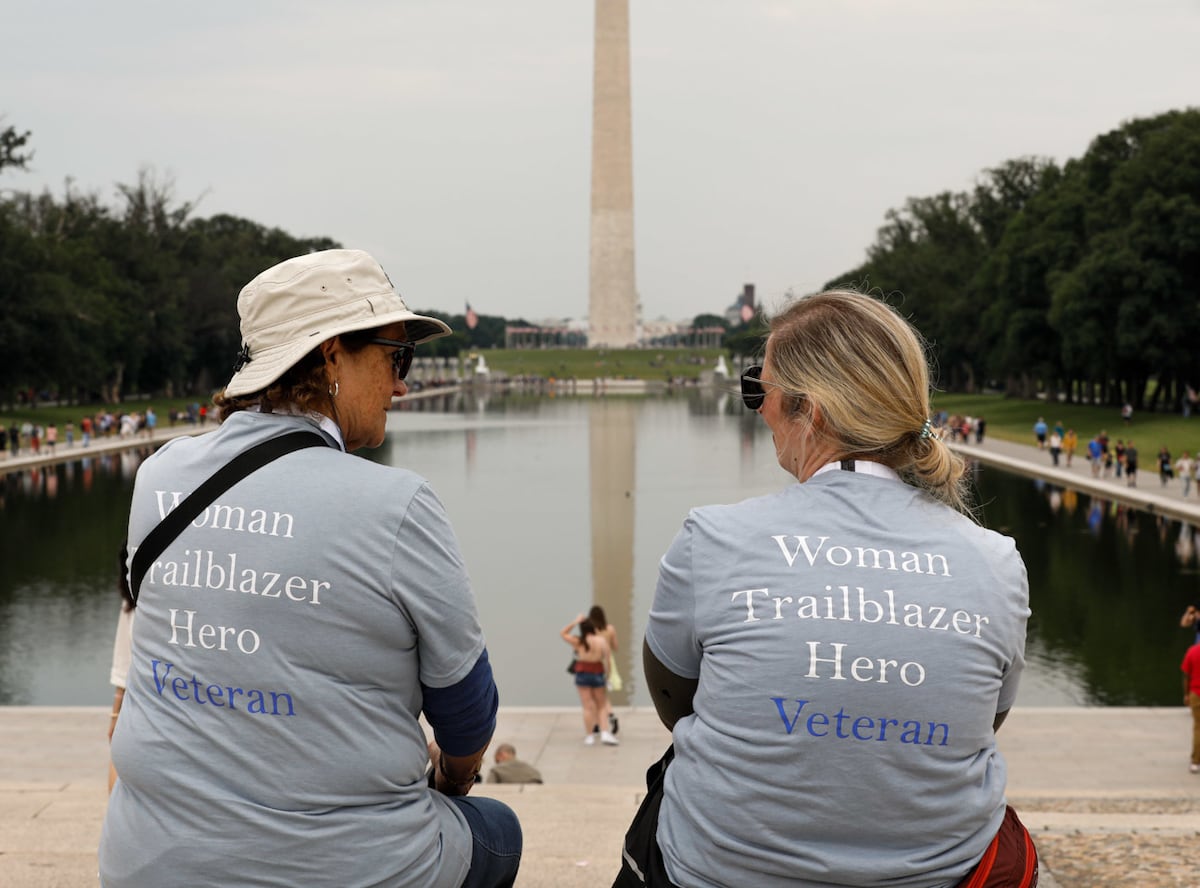
The Veterans Health Administration is developing clinical practice guidelines for physicians to treat symptoms of menopause, but more than half of female patients aren’t aware of resources available at the VA on the subject, a government analysis has found.
The Department of Veterans Affairs offers care to address menopause symptoms such as hot flashes, night sweats, brain fog and sleep issues, and it is developing physician guidelines on assessing, diagnosing and treating health issues that occur when hormone levels drop in patients.
But while VHA has developed resources like brochures and a website to teach women on their care options, 60% of 348 female veterans surveyed said they had never seen these materials, according to a Government Accountability Office report published June 12.
And VA hospital and clinic officials said they faced difficulties finding the time to discuss these resources with patients, GAO analysts found.
Women make up the fastest growing group in the veteran population, from 4% in 2000 to an anticipated 18% by 2040. More than half of the 687,000 women veterans who receive medical care at the VA care are between the ages of 45-64, the age range when most experience perimenopause and menopause, the cessation of their periods.
Given this growing population, members of Congress asked the GAO to study the VA’s treatment options and educational resources for patients going through this change.
The GAO found that VA offers broad access to medical care for menopause symptoms and has services tailored specifically to support veterans who are more likely to have concurrent conditions such as chronic pain and post-traumatic stress disorder than the general population.
Without knowing that this care is available, however, women veterans may not know to bring up their symptoms with their VA health care providers, GAO analysts wrote in “VA Menopause Care: Actions Needed to Help Ensure Quality Care and Patient Education.”
In the past several years, the medical establishment and women have been more open about menopause, prompted largely by new research that shows a common treatment for symptoms — hormone replacement therapy — is less likely to be linked to cardiovascular disease and breast cancer than previously thought.
And women’s health is being taken more seriously than ever before, according to Gloria Bachmann, co-director of the Women’s Health Institute and associate dean for Women’s Health with Rutgers Robert Wood Johnson Medical School.
The FDA removed its “black box” warnings from hormone replacement therapy for menopause symptoms in October, and in addition to the new research, “society does not look at menopause in such a negative way anymore,” Bachmann said during a Rutgers media interview at the time.
“We now have many role models who are in their 50s and 60s, and they’re not considered old. They are still seen as attractive and productive. Many actors and political individuals are of menopausal age, and we still respect them very much,” Bachmann said.
The GAO report said that instituting the clinical practice guidelines that are in development and ensuring they are followed as well as educating patients on menopause could “help VHA better meet its goal of providing women veterans with comprehensive health care.”
The GAO recommended that VA use performance measures to ensure that its new clinical guidelines are implemented and develop strategies to ensure that veterans understand the resources available at the VA to learn about and treat menopause.
The agency provided a copy of the report to the VA for review and response but the department did not provide comment, according to the GAO.
New York Sen. Kirsten Gillibrand, the ranking Democrat on the Senate Aging Committee, was among the lawmakers who requested the study. She has been at the forefront of advocacy for women’s health, sponsoring legislation in 2024 with 16 other senators to encourage federal research on menopause and coordinate federal programs across health agencies.
“Menopause care is essential healthcare for female veterans and the VA must not treat it as an afterthought,” Gillibrand said in a statement Monday to Military Times. “I will hold the VA’s feet to the fire until every veteran has the resources they need to age with dignity.”
Rep. Julia Brownley, D-Calif., sponsored a House bill last year requesting the GAO review. She said Monday that the report made “clear that more must be done” to ensure that veterans have access to information and treatment.
“Beyond these symptoms, these transitions mark critical health inflection points that can affect a woman’s long-term health and well-being,” said Brownley in a statement to Military Times. “That is why I’m working alongside Sen. Gillibrand and my colleagues on the House Committee on Veterans Affairs to close these gaps in care, strengthen education and outreach for women veterans and ensure VA is fully implementing evidence-based menopause care across its health system.”
The VA is launching a program of regional summits for women veterans next month in San Antonio to encourage women veterans to enroll with the VA and consider VA health care.
The “Boots on the Ground for Boots on the Ground” summits will take place through May 2027 and are sponsored by the VA Center for Women Veterans and the Office of Women’s Health.
In December, the department lifted a requirement that veterans need a referral from their primary care physician to schedule an appointment for gynecological care.
VA Secretary Doug Collins said the department is shifting to ensure that it works better for all veterans, regardless of sex.
“This is what it looks like when VA is focused on putting veterans first,” Collins said in a statement. “By relentlessly focusing on customer service and convenience, we are building a department that works better for the men and women we are charged with serving.”
Patricia Kime is a senior writer covering military and veterans health care, medicine and personnel issues.
Read the full article here