

NEWYou can now listen to Fox News articles!
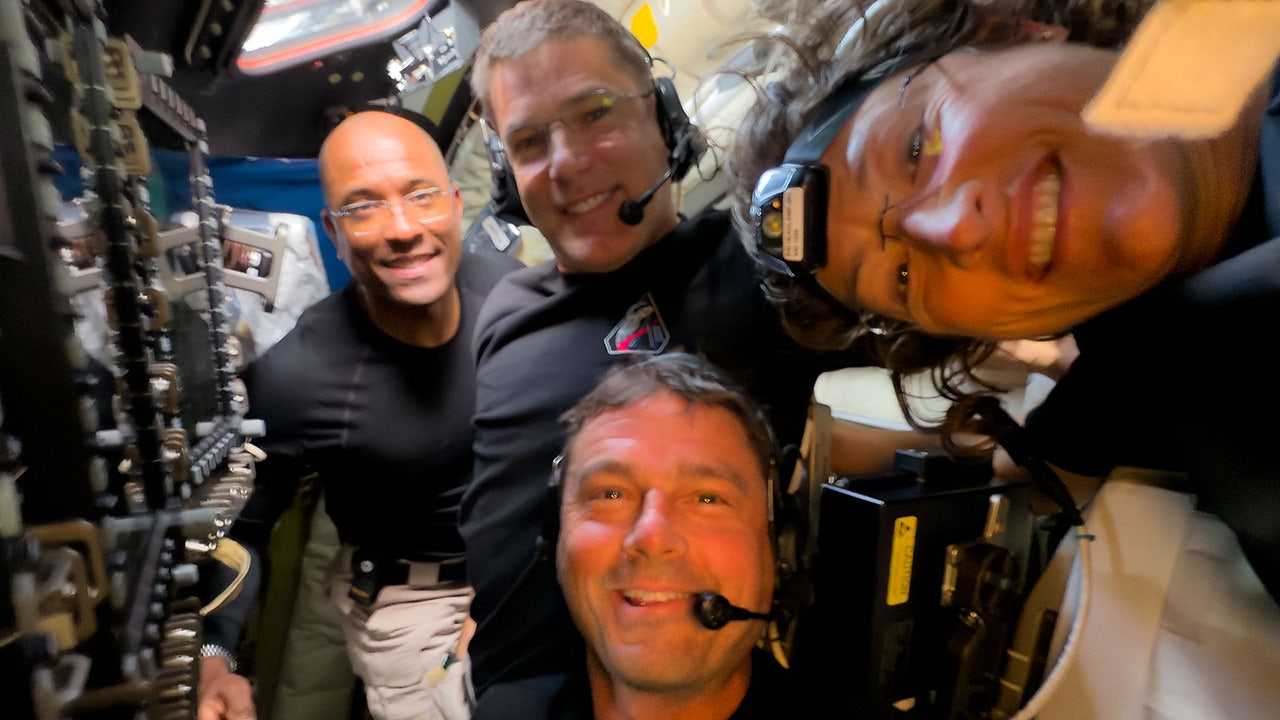
Now that Artemis II has completed its lunar flyby and returned to Earth, Artemis is no longer a concept or a promise. It is a working American deep space architecture.
In a single mission, the Artemis II crew executed manual piloting and proximity operations, while the Orion spacecraft operated at lunar distance and proved the life support, propulsion, power, thermal, navigation and reentry systems that generated the operational data NASA says will shape the missions that follow.
As we celebrate this achievement, it is worth remembering how this mission began — and why it matters.
ARTEMIS II NEARS END OF HISTORIC MISSION WITH SPLASHDOWN OFF CALIFORNIA COAST
Early in his first term, Donald Trump saw what no president since Richard Nixon had seen clearly enough: returning to the Moon is not some relic of the last century’s glory days. It is the strategic high ground of this one.
The triumph of Artemis II began on Dec. 11, 2017, with the signing of Space Policy Directive-1. It redirected NASA away from two dead ends.
The first was the Obama-era asteroid pathway, in which NASA planned to retrieve a boulder from a near-Earth asteroid, place it in lunar orbit and send astronauts there as a steppingstone to Mars. It was the kind of fool’s errand only Washington could love — expensive, convoluted and utterly lacking the geopolitical clarity of a return to the moon.
Artemis II proved deep space systems work, but the real strategic contest with China is just beginning.
The second was America’s long low-Earth-orbit holding pattern. Years of useful work aboard the International Space Station, to be sure, but no serious strategy for pushing outward into deep space and reclaiming leadership beyond it.
In the Trump doctrine, the moon is not just a destination. It is the next great platform of national power — a logistics hub, a science outpost, a proving ground for deep-space industry and a potential source of water ice for drinking water, oxygen and rocket fuel.
It is also where the technologies of in-space manufacturing, power generation, navigation, extraction and transport will be tested and refined and where military advantage, industrial capacity, technological leadership and geopolitical influence all converge.
That is exactly why Communist China is openly targeting a crewed lunar landing by 2030 and an International Lunar Research Station with Russia by 2035. This is a contest for position. The nation that gets there first will shape far more than headlines. It will shape the future balance of power.
The genius of Artemis is that it is not a purely governmental effort. It is a public-private partnership designed to harness exactly what America does best: entrepreneurial innovation, private-sector speed and allied cooperation.
ASTRONAUT TELLS CNN ‘ENTIRE’ TRUMP ADMINISTRATION DESERVES CREDIT FOR ARTEMIS MISSION SUCCESS
NASA provides the anchor mission and strategic architecture. The broader design relies on commercial firms and friendly nations, and SpaceX and Blue Origin are central to the landing architecture.
Artemis II is teaching us something essential about the nature of deep space exploration. Human beings still matter.
In the first space race, Apollo demonstrated to the world that America could outbuild, outthink and outlast its authoritarian rival. It also accelerated key technologies — microelectronics, computing, materials science, telecommunications, precision manufacturing, propulsion and guidance systems — strengthened our defense industrial base and renewed confidence in the nation’s capacity to build and win.
In this second contest, Artemis is teaching us something essential about the nature of deep space exploration. Human beings still matter.
ARTEMIS II LAUNCHES ASTRONAUTS AROUND THE MOON IN FIRST DEEP SPACE MISSION SINCE APOLLO
NASA did not send four passengers around the moon. It sent trained observers — the eyes of our lunar scientists on Earth. During the far-side flyby, the crew photographed and described impact craters, ancient lava flows, cracks and ridges and subtle differences in color, brightness and texture that help scientists read the moon’s geologic history.
Artemis II proved something larger than engineering as well. It reminded the world that America can still do difficult things in full public view. Fox’s own coverage gravitated to the defining images of the mission — Earthset, the far-side blackout and Trump’s call hailing the crew as “modern-day pioneers.”
Artemis is not just exploration. It is strategic theater, alliance management and rule-setting in real time. In that sense, it is Trumpian.
CLICK HERE FOR MORE FOX NEWS OPINION
The mission also underscored a harder truth: serious space programs are built on mastery of the unglamorous. Coverage lingered on the blackout behind the moon. But a permanent lunar presence will depend less on spectacle than on whether America can master sanitation, stowage, cabin atmosphere, suit operations, radiation sheltering, emergency procedures, precise communications, reentry and recovery.

Great powers do not stay on the moon by getting the photo. They stay there by making the plumbing, the procedures and the ride home work.
What’s next? Bank the data, incorporate the lessons of the flight and move fast. Fly Artemis III in 2027 as the Earth-orbit systems test for the commercial landers and the new lunar suits. Then use Artemis IV in 2028 to put Americans back on the lunar surface. After that, keep a real cadence — at least one surface mission every year and eventually faster if the architecture holds and reusable commercial hardware matures as planned.
What Washington must supply is speed, money and resolve. Because if America treats Artemis like just another program to be managed, we may yet live to see a red moon rising.
Peter Navarro is co-author with Greg Autry of “Red Moon Rising.”
CLICK HERE TO READ MORE FROM PETER NAVARRO
Read the full article here